What is In This Content?
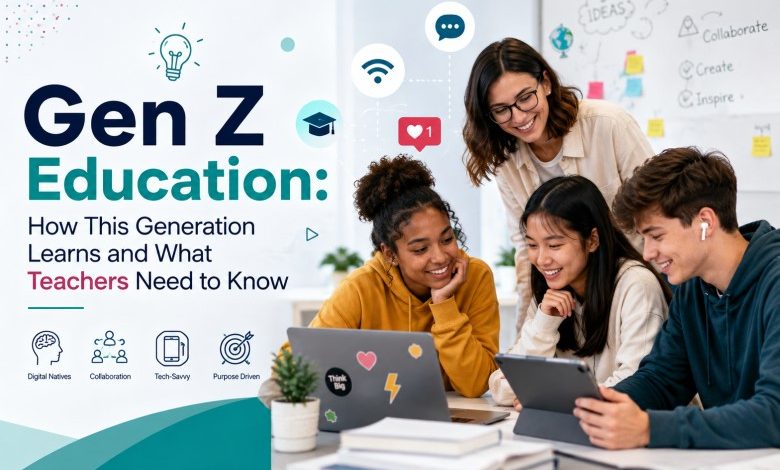
Gen Z covers anyone born between 1997 and 2012, which puts most of them in middle school, high school, or college right now. Ask any teacher who’s been in the classroom for the last decade and they’ll tell you something changed. Students don’t sit through a 45-minute lecture the way they used to. They check their phone during a pause. They want to know why a lesson matters before they’ll put effort into it. That’s Gen Z education in a nutshell, and this guide breaks down how it actually plays out and what you can do about it.
Who Is Gen Z, Really?
Gen Z grew up with a phone in hand from a young age. Not “had access to the internet” like Millennials did, but grew up posting, scrolling, and searching before most of them could drive. That difference matters more than people give it credit for.
This generation is also the most racially and ethnically diverse in U.S. history, and a large share are children of immigrants. According to Pew Research Center’s generational data, Gen Z spans ages 12 to 27 as of 2024, meaning the bulk of them are still moving through the school system right now, not just entering it.
How Gen Z Actually Learns
Forget the stereotype that Gen Z can’t focus on anything. They focus plenty, just not on things that feel pointless.
A few patterns show up again and again in classrooms and in the research:
They’d rather build something than listen to someone talk about it. Hands-on projects and labs land better than a lecture, even a good one.
Long stretches of unbroken talking lose them fast. Ten or fifteen minutes in, attention drops off unless something shifts, a question, a video, a task, anything.
Visuals do a lot of heavy lifting. A short video or a clear diagram often teaches faster than three paragraphs of text.
They want some say in how they learn. Given a choice between two assignment formats, they’ll put in more effort on the one they picked themselves.
And they expect feedback fast. Waiting two weeks for a grade with one line of comments doesn’t match how they’re used to getting information. Think notification speed, not postal mail speed.
Gen Z vs Millennials: Where They Split
People lump Gen Z and Millennials together a lot, but their classroom habits aren’t the same.
| Factor | Millennials | Gen Z |
|---|---|---|
| Tech exposure | Grew up alongside the early internet | Grew up with smartphones already in hand |
| Learning style | Comfortable with group discussion | Leans toward working independently, at their own pace |
| Attention span | Could sit through longer lectures | Needs shifts in activity every few minutes |
| View of college | Treated as the expected next step | Increasingly questioned on cost and payoff |
| Career priority | Wanted stability | Wants flexibility and a sense of purpose |
What Actually Gets in Gen Z’s Way at School
A few things trip up Gen Z students more than past generations, and it’s worth naming them plainly.
They struggle to tell good information from bad. With everything a search away, a lot of students grab the first answer instead of checking who wrote it or whether it holds up. That’s an information literacy gap, not a laziness problem.
Their attention has been trained by short-form content. Years of scrolling built a habit, and that habit doesn’t switch off the moment they walk into a classroom.
They’re skeptical about whether college pays off. Tuition costs climbed, and so did the questions. Back in 2002, about 72% of high school students expected to earn a bachelor’s degree. By 2022 that number had fallen to 44%, according to research from the Georgetown Center on Education and the Workforce. That’s not a small shift.
They’re carrying more stress than the data used to show. Academic pressure, constant comparison online, and real uncertainty about what comes after graduation all show up in the classroom, whether or not a student says anything about it out loud.
How to Actually Teach Gen Z Students
None of this means you have to reinvent your entire curriculum. Small changes go a long way.
Cut lessons into shorter chunks with a clear point at the end of each one instead of one long block. Tie the material to something real, a job, a current event, a problem they already care about, so the “why does this matter” question answers itself. Use a rubric so students know exactly what you’re grading before they hand anything in; our Rubric Generator makes that part quick if you don’t want to build one from scratch every time. Where you can, let students pick the topic or the format. And teach them, directly, how to check a source and spot bias, because nobody else is going to.
Where Career Readiness Fits In
Gen Z doesn’t want education for its own sake. They want to know it leads somewhere. More jobs will call for education past high school by 2031, but that doesn’t mean students are convinced a four-year degree is the only route there. Plenty are weighing trade programs and certificates just as seriously.
Schools that connect what happens in class to an actual career path, through internships, project work, or direct ties to local employers, tend to hold Gen Z’s buy-in a lot better than schools running on tradition alone.
Common Questions About Gen Z Education
A mix of things: trouble filtering good information from bad, attention spans shaped by short-form content, and more academic pressure than earlier generations dealt with at the same age.
Shorten your lessons, connect them to something real, give feedback fast, and build in some choice. Small shifts, not a full overhaul.
Purpose and flexibility, mostly. They want to understand why a lesson matters before they commit to it.
Most still see value in education past high school, but a growing number question whether a traditional four-year degree is worth what it costs compared to trade skills or certifications.
Gen Z tends to work better independently and pushes back harder on the assumption that college is the only path. Millennials, by and large, treated college as the default.